Don't miss our holiday offer - up to 50% OFF!
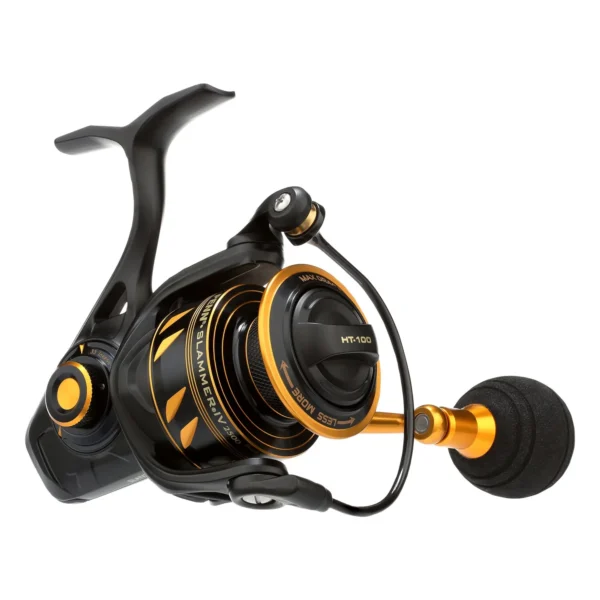
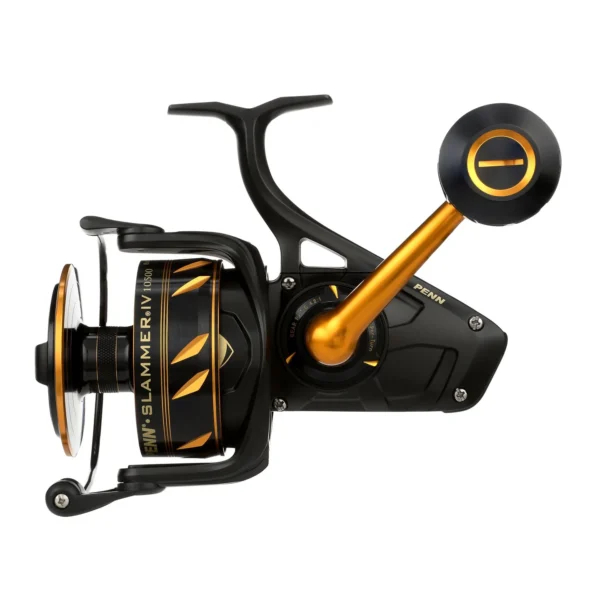
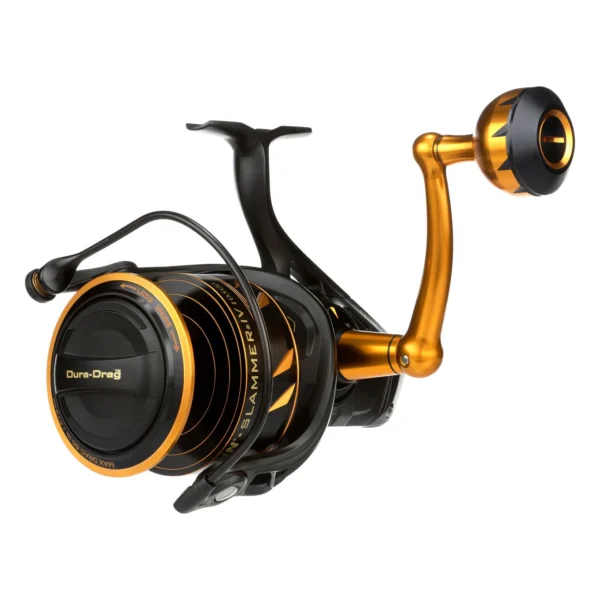
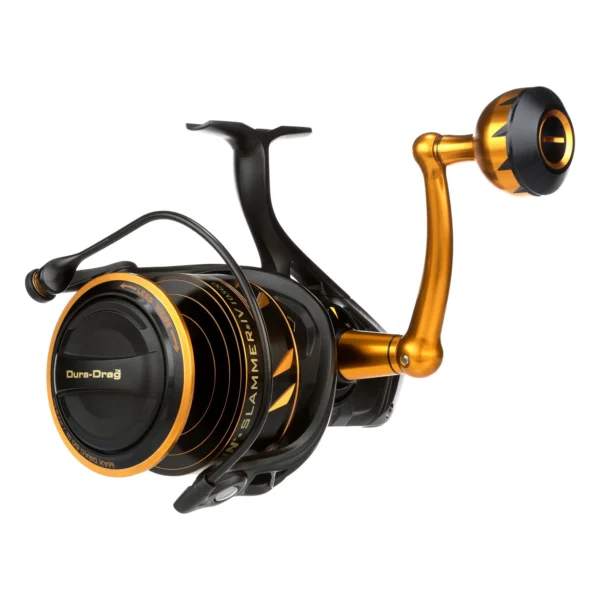
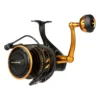
PENN SLAMMER® IV SPINNING REEL
Price range: $299.95 through $469.95
The Slammer® IV is packed with more features than ever before. Building off of our proven IPX6 sealed body and spool, we redesigned our Slammer® drag system to not only be better sealed, but also offer a wider range of usable drag, all while being bearing supported for extra smoothness. Adding our all brass CNC gear technology, 8+1 stainless steel bearing system and Hydrophobic Line Roller Bearing has made the Slammer IV the ultimate workhorse reel. ##Key differences for the 2500 are listed in the feature bullets.
- Model #: SLAIV10500
- SKU: 1545771
PENN SLAMMER® IV SPINNING REEL
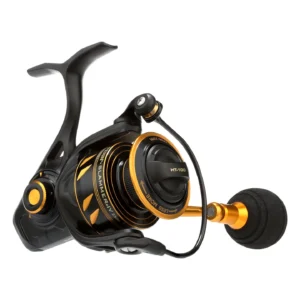
Built for Demanding Fishing Conditions
When demanding fishing conditions call for dependable equipment, a purpose-built spinning reel can make every part of the experience more controlled. The PENN SLAMMER® IV SPINNING REEL has been developed for anglers who expect durable construction, smooth operation, and dependable performance from their tackle.
Rather than being designed only for occasional outings, this reel has been created around the demands associated with serious saltwater fishing. Consequently, it can be considered for a broad range of applications where resistance to harsh environments, reliable drag performance, and strong mechanical operation are important.
Moreover, its practical spinning-reel configuration allows it to be used across different fishing techniques. Whether casts are being made from shore, a boat is being used offshore, or larger fish are being targeted in demanding conditions, the platform is intended to provide a confident connection between angler and tackle.
At the same time, versatility remains an important part of its appeal. Different reel sizes can be selected according to the fishing environment, target species, line requirements, and preferred presentation. Therefore, anglers can choose a configuration that better corresponds with their individual setup rather than relying on a single universal size.
Designed for Serious Anglers
Fishing equipment is often exposed to conditions that would challenge ordinary consumer products. Saltwater, moisture, sand, repeated casting, heavy loads, and prolonged use can all place additional demands on a reel.
For that reason, durability is an important consideration when spinning tackle is being selected.
The design philosophy behind this reel is centered around rugged use. Its construction is intended to provide the mechanical support required during demanding fishing situations while maintaining the familiar handling characteristics expected from a spinning reel.
Furthermore, attention to internal protection and overall construction helps support its suitability for challenging environments. Proper maintenance should still be performed after use, especially when the reel has been exposed to saltwater or debris.
Consequently, long-term performance can be supported through a combination of robust construction and responsible care.
Saltwater-Oriented Performance
Saltwater fishing can introduce a unique set of challenges. Corrosive environments, moisture, spray, and fine particles can reach areas of fishing equipment that are not exposed during freshwater use.
Therefore, equipment selected for marine fishing should be chosen with those conditions in mind.
The reel has been positioned as a saltwater-oriented spinning platform. This makes it suitable for anglers who regularly pursue fish in coastal and offshore environments and who want their tackle to be prepared for demanding sessions.
In addition, its spinning configuration provides flexibility across several styles of fishing. Shore anglers, boat anglers, pier fishermen, and other saltwater users can benefit from a reel format that remains familiar and practical.
However, no fishing reel should be treated as completely maintenance-free. After saltwater exposure, appropriate cleaning and care should be incorporated into the normal fishing routine.
Rugged Construction for Confident Use
A reel can only perform consistently when its major components work together effectively. The body, rotor, spool, handle, gearing, bail system, and drag mechanism all contribute to the overall fishing experience.
Because of this, construction quality becomes particularly important when heavier tackle is being used.
The design of this platform is intended to provide a solid foundation for demanding applications. A sturdy reel body can help create a more stable feel in the hand, while the overall construction can contribute to confidence when pressure is being applied during a fight.
Additionally, a well-balanced setup can help reduce unnecessary fatigue during extended fishing sessions. When equipment feels predictable and controlled, more attention can be devoted to casting, retrieving, detecting bites, and managing hooked fish.
Powerful Drag Control
Drag performance is one of the most important considerations when a spinning reel is being selected.
A properly adjusted drag allows controlled line release when a fish makes a powerful run. As a result, excessive pressure can be reduced while the angler maintains a connection to the fish.
The drag system incorporated into this reel is intended for demanding applications where controlled pressure can be essential. Depending on the selected model, anglers can choose a configuration appropriate for different line classes and target species.
Furthermore, smooth drag operation can be particularly valuable when larger fish are being fought near structure or in open water. Consistent pressure can help the angler respond to sudden changes in movement without relying entirely on manual line control.
For best results, drag settings should always be matched to the line, leader, hooks, knots, rod, and target species being used.
Smooth Retrieval and Mechanical Control
Retrieval quality can influence both comfort and fishing efficiency.
A smooth retrieve allows lures and rigs to be worked more naturally. It can also make repeated casting and winding less tiring during long sessions.
The mechanical system has been designed to provide a controlled retrieve suitable for demanding fishing applications. Depending on the selected size and configuration, the reel can be matched with different rods and line setups.
In addition, appropriate gear selection can help anglers tailor retrieval characteristics to their preferred technique.
Fast retrieves may be useful when lures need to be recovered quickly or when active presentations are being used. Conversely, a slower mechanical configuration can provide additional torque-oriented characteristics for applications where controlled power is prioritized.
Therefore, model selection should be based on the intended fishing technique rather than reel size alone.
Choosing the Right Size
One of the most important purchasing decisions involves selecting the appropriate reel size.
Smaller configurations can be suitable when lighter tackle, reduced weight, and finesse-oriented presentations are preferred. Larger configurations, meanwhile, can provide greater line capacity and are generally considered when heavier tackle and stronger fish are involved.
The right choice will depend on several factors, including:
- Target species
- Fishing location
- Rod length and power
- Main-line type
- Line diameter
- Leader strength
- Casting distance
- Lure or bait weight
- Expected fish size
- Fishing technique
- Personal handling preference
Consequently, anglers should consider the complete tackle system rather than selecting a reel in isolation.
Versatility Across Fishing Applications
A major advantage of a versatile spinning platform is its ability to support different fishing situations.
Depending on the selected model, applications can include:
- Inshore saltwater fishing
- Surf-oriented setups
- Pier fishing
- Jetty fishing
- Rock fishing
- Nearshore boat fishing
- Offshore applications
- Heavy lure casting
- Bait fishing
- Species-specific saltwater techniques
Because different fishing environments create different demands, selecting the appropriate size remains important.
For example, a compact setup can be advantageous when mobility and reduced tackle weight are priorities. On the other hand, larger configurations may be better suited to heavier line, increased capacity, and larger targets.
Comfortable Spinning-Reel Handling
Comfort becomes increasingly important as fishing sessions become longer.
Repeated casting, retrieving, and fighting fish can place considerable demand on the hands and arms. Therefore, reel ergonomics should not be overlooked during equipment selection.
The familiar spinning-reel format provides an intuitive platform for many anglers. Casting can be performed without the learning curve associated with some specialized reel designs, while retrieval remains straightforward and familiar.
Furthermore, the handle position and overall reel configuration can be integrated naturally into a variety of rod setups.
When paired with an appropriately balanced rod, the result can be a more comfortable fishing system for extended sessions.
Built for Repeated Use
Fishing gear is rarely judged by a single cast.
Instead, reliability is often demonstrated over dozens or hundreds of casts, repeated retrieves, changing weather conditions, and numerous fishing sessions.
For that reason, a reel intended for serious use needs to provide a combination of durability and practical functionality.
This platform has been created with repeated use in mind. Its rugged orientation makes it appropriate for anglers who expect their equipment to be used regularly rather than stored away after occasional trips.
Nevertheless, proper maintenance remains essential. Equipment that is exposed to saltwater should be rinsed and cared for according to the manufacturer’s recommendations.
Practical Saltwater Maintenance
Even highly durable fishing equipment benefits from regular care.
After saltwater use, loose salt and debris should be removed using appropriate procedures. Excessive water pressure should generally be avoided because it can potentially force contaminants or moisture into areas that should remain protected.
After cleaning, the reel should be allowed to dry appropriately before being stored.
Additionally, routine inspection can help identify issues before they become more significant. The bail, handle, spool, drag adjustment, line roller, and other accessible components can be checked regularly.
With responsible maintenance, the working life of fishing equipment can be supported while performance can remain more consistent between trips.
A Reliable Choice for Different Fishing Styles
Every angler approaches fishing differently.
Some prefer long casts from the shoreline. Others spend most of their time working lures around structure. Meanwhile, boat anglers may require heavier tackle for powerful saltwater species.
A versatile spinning platform can accommodate these different approaches when the correct model is selected.
Moreover, spinning reels remain popular because they combine casting accessibility with broad application potential. They can be used by newer anglers while still offering the control and capacity required by experienced fishermen.
That balance makes this type of reel especially practical for anglers who want equipment that can support evolving fishing techniques.
Product Highlights
- Rugged spinning-reel platform designed for demanding fishing applications
- Saltwater-oriented construction suited to marine environments
- Powerful drag system intended for controlled fish fighting
- Durable mechanical design for repeated fishing use
- Multiple size options for different tackle requirements
- Versatile application range across inshore and offshore fishing
- Spinning configuration offering familiar casting and retrieval
- Suitable for a wide range of fishing techniques
- Designed for serious recreational and professional-oriented use
- Maintenance-friendly approach when appropriate care procedures are followed
Why Construction Matters in Saltwater Fishing
Saltwater environments are unforgiving.
Even when conditions appear calm, marine fishing can expose equipment to spray, humidity, salt deposits, sand, and repeated mechanical stress.
Consequently, equipment should be selected according to the environment in which it will actually be used.
A ruggedly constructed reel provides a practical foundation for those conditions. However, durability should not be confused with immunity from corrosion or damage.
Instead, good construction should be combined with appropriate cleaning, storage, lubrication, and inspection.
This balanced approach can help anglers get more dependable service from their equipment.
Matching the Reel With Your Rod
A reel performs as part of a larger system.
Therefore, rod compatibility should be considered before a purchase is made.
The rod’s power, action, length, lure rating, and line rating should correspond with the reel and the intended fishing technique. A reel that is too large for a lightweight rod can create an unbalanced setup, while an undersized reel may not provide the desired line capacity or drag capability for heavier applications.
As a result, the most effective setup is usually achieved when the rod, reel, line, leader, lure, and target species are considered together.
Selecting Your Line
Line selection can significantly influence reel performance.
Monofilament, fluorocarbon, and braided lines each offer different characteristics. Braided line, for example, is commonly selected when anglers want a high strength-to-diameter ratio and increased sensitivity.
Monofilament may be preferred for certain applications because of its stretch and handling characteristics.
Meanwhile, fluorocarbon is often used as a leader material because of its abrasion resistance and underwater characteristics.
The selected line should always be matched to the reel size, spool capacity, rod specifications, and target species.
Casting Performance
Casting distance can be influenced by numerous variables.
Rod action, lure weight, line diameter, spool design, wind direction, casting technique, and terminal tackle can all contribute to the final result.
A properly matched spinning setup can provide an efficient casting platform for a wide range of applications.
Furthermore, selecting an appropriate spool capacity can be particularly important when long casts are expected. Shore anglers, surf fishermen, and others working large areas of water may benefit from having sufficient line available for extended casts and long fish runs.
Managing Powerful Fish
When a large fish is hooked, the reel becomes part of a complete pressure-management system.
The angler’s rod provides leverage. The line transfers pressure. The knots connect the terminal tackle. Meanwhile, the drag controls how line is released.
Because each component contributes to the result, the system should be balanced before fishing begins.
The reel’s drag should be adjusted according to the line and terminal tackle rather than simply being set to maximum pressure.
Additionally, anglers should remain aware of structure, current, boat position, and fish behavior.
Designed for Confidence
Confidence in fishing equipment does not come from appearance alone.
Instead, it is built through predictable operation, appropriate equipment selection, and repeated experience.
A rugged reel that feels stable during casting and controlled during retrieval can contribute to a more focused fishing experience.
Moreover, confidence can be particularly valuable when a hard-fighting fish takes the bait or lure unexpectedly.
With the appropriate model, line, rod, and leader combination, anglers can approach demanding situations with a more organized tackle system.
Fishing From Shore
Shore-based fishing often demands versatility.
A single session can involve changing tides, shifting wind, uneven terrain, long casts, and a mixture of target species.
For these conditions, a spinning reel can offer practical flexibility.
Depending on the selected size, it can be matched with rods intended for light coastal fishing or heavier surf and shore applications.
Additionally, the reel’s line capacity should be considered carefully when long-distance casting or extended fish runs are expected.
Fishing From a Boat
Boat fishing presents different requirements.
Space may be limited, fish may be stronger, and sudden changes in direction can occur quickly.
A robust spinning reel can be useful when anglers want a familiar platform capable of handling a variety of presentations.
Depending on the chosen configuration, it can be paired with heavier rods and stronger lines for demanding nearshore or offshore applications.
However, the final setup should always be selected according to the species and fishing conditions rather than relying solely on reel size.
Pier and Jetty Fishing
Piers and jetties can create particularly demanding environments.
Rocks, pilings, current, barnacles, and other structure can create abrasion hazards. Fish may also need to be kept away from obstacles immediately after being hooked.
In these situations, equipment strength and controlled drag management become especially important.
A properly matched setup can provide the mechanical support needed to manage these situations while giving the angler a familiar spinning configuration.
Lure Fishing Application
Spinning tackle is frequently used for artificial-lure fishing.
Different lure styles can require different retrieval speeds and rod actions. Soft plastics, metal jigs, plugs, spoons, and other presentations may all be worked differently.
Consequently, the reel should be selected according to the intended technique.
A fast-retrieve configuration can be useful when rapid lure recovery is desired. A more torque-oriented setup can be considered when heavier presentations or powerful fish are the primary focus.
Bait Fishing Applications
The same versatility can extend to bait fishing.
Natural bait can be presented from shore, piers, boats, and other environments. Depending on the target species, different line capacities, leader strengths, and hook sizes may be required.
The reel should therefore be selected as part of the complete bait-fishing system.
With the correct setup, the angler can benefit from controlled line management while maintaining the familiar handling characteristics of spinning tackle.
Built for Anglers With Different Experience Levels
Fishing equipment should be accessible without being limiting.
Newer anglers can benefit from the straightforward nature of spinning tackle, while experienced anglers can take advantage of advanced line, leader, and drag-management techniques.
This broad usability makes the platform appropriate for different experience levels.
At the same time, proper education remains important. Beginners should become familiar with drag adjustment, knot strength, line management, and maintenance before taking equipment into demanding conditions.
A Practical Addition to a Saltwater Tackle Collection
Many anglers maintain more than one fishing setup.
One reel may be used for light inshore fishing, another for heavier shore applications, and another for boat fishing.
Because different sizes can address different fishing requirements, this platform can be incorporated into a broader tackle collection.
Furthermore, having several appropriately configured setups allows anglers to adapt to changing conditions without rebuilding a single outfit before every trip.
What Makes a Spinning Reel Versatile?
Versatility comes from several characteristics working together.
A spinning reel can be used with many rod types, line systems, lure weights, and fishing techniques. Its casting method is familiar to a wide range of anglers, while its open spool design makes line management straightforward.
Additionally, different reel sizes can cover substantially different applications.
As a result, the same general reel platform can serve very different fishing purposes when the correct model is selected.
Consider the Target Species
Target species should remain one of the primary factors in reel selection.
Smaller coastal species may require less line capacity and lower overall tackle weight. Larger predatory species can require stronger line, greater drag capability, and increased spool capacity.
Therefore, the reel should be selected after the target species and fishing environment have been identified.
This approach can prevent anglers from purchasing equipment that is either unnecessarily heavy or insufficient for the intended application.
Consider the Fishing Environment
Fishing location can be just as important as target species.
Freshwater lakes, rivers, estuaries, beaches, rocky shorelines, piers, and offshore waters all present different challenges.
Saltwater environments are particularly demanding because of corrosion risk.
Accordingly, anglers who regularly fish in marine conditions should consider equipment specifically intended for those environments.
Consider Your Line Capacity
Line capacity becomes increasingly important when fish can make long runs.
A reel with insufficient capacity may create problems during a prolonged fight. Conversely, excessive capacity can add unnecessary weight when it is not required.
Therefore, line capacity should be matched to the expected fishing scenario.
The appropriate amount will depend on line diameter, spool design, fishing distance, target species, and expected fish behavior.
Consider Retrieve Speed
Retrieve speed can influence how an artificial lure behaves.
A faster gear ratio can allow more line to be recovered with each handle rotation. This can be useful when quickly retrieving a lure or picking up slack.
A slower configuration, meanwhile, can provide characteristics that some anglers prefer when working heavier presentations.
Neither approach is universally appropriate.
Instead, retrieve speed should be selected according to the fishing technique and personal preference.
Long-Term Value Through Proper Care
The value of fishing equipment extends beyond the initial purchase.
Regular maintenance can help preserve mechanical performance and reduce avoidable wear.
After saltwater exposure, appropriate cleaning should be performed. Moving parts should be inspected, and manufacturer-recommended maintenance procedures should be followed.
Furthermore, reels should be stored in a dry, suitable environment when they are not being used.
These simple habits can contribute significantly to equipment longevity.
A Focus on Dependable Fishing
At the heart of a good fishing setup is dependable equipment.
The angler should be able to focus on reading the water, selecting a presentation, detecting bites, and fighting fish rather than worrying unnecessarily about equipment limitations.
That is why rugged spinning tackle continues to have a place in serious saltwater fishing.
The platform described here has been created for anglers who value durable construction, controlled operation, and versatility across demanding fishing applications.
Product Selection Guide
When selecting a model, consider the following questions:
What species are being targeted?
Larger species generally require stronger tackle and may benefit from a larger reel configuration.
Where will the reel be used?
Shore, pier, boat, surf, and offshore environments can require different combinations of capacity and power.
What line will be used?
Line diameter affects spool capacity, casting characteristics, and overall setup performance.
What rod will be paired with the reel?
The reel should complement the rod’s power, action, and recommended line range.
What presentation will be used?
Lure weight and retrieval style should influence gear and size selection.
Product Benefits at a Glance
- Durability: Designed around demanding fishing applications.
- Versatility: Suitable for multiple saltwater techniques.
- Control: Drag performance supports controlled line release.
- Handling: Familiar spinning-reel operation is provided.
- Selection: Multiple configurations allow application-specific choices.
- Maintenance: Routine care can support long-term performance.
- Adaptability: Can be matched with different rods and line systems.
- Saltwater suitability: Intended for anglers who regularly fish marine environments.
Why Proper Reel Selection Matters
A reel should never be chosen simply because it has the largest specifications.
More power is not always more practical.
A setup that is excessively heavy can become tiring during repeated casting. Conversely, an undersized reel may not offer sufficient capacity or mechanical support for a demanding application.
Therefore, balance is essential.
The most suitable configuration is the one that complements the rod, line, lure, target species, and environment.
The Complete Fishing System
Fishing performance is rarely determined by one component.
The rod, reel, line, leader, knots, hooks, lures, bait, and angler technique all contribute to the outcome.
Consequently, equipment should be evaluated as a complete system.
A powerful reel paired with an unsuitable rod may not produce the expected result. Similarly, strong line cannot compensate for weak knots or inappropriate terminal tackle.
For this reason, careful preparation should be given to the entire setup.
Maintenance After Saltwater Exposure
Saltwater maintenance should be treated as part of every fishing routine.
After a marine fishing trip, visible salt and debris should be removed using appropriate procedures. The reel should then be dried and stored correctly.
Additionally, periodic inspection should be performed.
If unusual resistance, noise, looseness, or inconsistent drag behavior is noticed, further inspection or professional servicing may be appropriate.
Following the manufacturer’s care recommendations remains the safest approach.
Storage Between Fishing Trips
Proper storage can help protect fishing equipment between outings.
Reels should be kept away from excessive humidity, extreme temperatures, and unnecessary exposure to contaminants.
Where possible, equipment should be stored in a clean, dry location.
Furthermore, reels should not be packed away while heavily contaminated with salt or debris.
A few minutes of maintenance after a fishing trip can help preserve equipment for the next one.
Confidence During Long Fishing Sessions
Long fishing sessions can test both angler and equipment.
Repeated casting creates mechanical repetition. Heavy fish create sudden loads. Changing weather can introduce moisture and spray.
A purpose-oriented reel can help provide a stable platform throughout those conditions.
Additionally, selecting the correct reel size can improve comfort by preventing unnecessary weight from being carried throughout the day.
A Balanced Approach to Performance
Performance should be understood as more than maximum power.
Smooth operation, handling, durability, line management, drag control, and compatibility all contribute to practical performance.
Therefore, the best setup is usually the one that provides the appropriate combination of these characteristics for the intended application.
This is especially important in saltwater fishing, where environmental demands can be significant.
Suitable for Serious Recreational Fishing
Serious recreational anglers often require equipment that can withstand frequent use.
Weekend fishing trips can involve demanding conditions just as easily as professional or tournament environments.
For that reason, durable equipment can be valuable even when fishing remains a recreational activity.
The platform provides a practical option for anglers who want equipment designed around demanding applications without sacrificing the familiar advantages of spinning tackle.
Designed for Different Fishing Environments
From open beaches to rocky coastlines, saltwater fishing can take many forms.
Each environment presents different opportunities and challenges.
A flexible reel platform allows anglers to build setups around those specific requirements.
Moreover, multiple configurations make it possible to select tackle according to line capacity, target species, casting requirements, and preferred handling.
Final Product Overview
For anglers seeking a rugged spinning platform for demanding fishing environments, this reel provides a combination of durability, versatility, controlled drag performance, and practical handling.
Its saltwater-oriented design makes it particularly relevant to marine fishing applications, while the availability of different configurations allows anglers to select equipment according to their individual needs.
Furthermore, its familiar spinning format makes it approachable for a wide range of users.
When properly matched with a suitable rod, line, leader, and terminal setup, it can become a dependable component of a serious fishing system.
Regular maintenance should always be incorporated into the ownership routine, particularly after saltwater exposure.
Ultimately, successful equipment selection begins with understanding where, how, and for which species the tackle will be used. By considering those factors carefully, anglers can build a setup that feels balanced, practical, and prepared for the conditions ahead.
Product Highlights for Online Listings
- Rugged saltwater-oriented spinning reel
- Designed for demanding fishing conditions
- Powerful and controllable drag performance
- Durable construction for repeated use
- Multiple reel-size configurations
- Suitable for shore and boat applications
- Useful for lure and bait fishing
- Compatible with a range of fishing rods and line systems
- Familiar spinning-reel handling
- Designed for anglers with different experience levels
- Suitable for serious recreational fishing
- Regular maintenance recommended for long-term performance
Frequently Asked Questions
What type of fishing is this reel intended for?
The platform is oriented toward demanding fishing applications, particularly saltwater environments. Depending on the selected configuration, it can be used for inshore, shore, pier, boat, and other marine fishing applications.
Is it suitable for saltwater?
Yes. It has been designed with saltwater-oriented applications in mind. However, regular cleaning and appropriate maintenance should still be performed after marine use.
Can it be used from shore?
Yes. Spinning tackle is commonly used for shore-based fishing, and the appropriate configuration can be selected according to casting distance, line capacity, target species, and tackle weight.
Can it be used from a boat?
Yes. The appropriate model can be paired with a suitable boat-fishing rod and line system.
What line should be used?
Line selection depends on the target species, fishing technique, rod, and reel configuration. Braided, monofilament, and other line systems may be appropriate depending on the application.
How should the reel be maintained?
After saltwater use, appropriate cleaning should be performed according to manufacturer recommendations. Excessive water pressure should be avoided, and the reel should be dried properly before storage.
Is a larger reel always better?
No. Reel size should be matched to the fishing application. An unnecessarily large reel can add weight, while an undersized reel may not provide the required capacity or power.
What rod should be paired with it?
The rod should be selected according to the reel configuration, target species, lure or bait weight, line strength, and fishing environment.
Is this reel suitable for beginners?
Spinning reels are generally familiar and accessible to anglers at different experience levels. Beginners should still learn proper drag adjustment, line management, knot tying, and maintenance.
Can it be used for lure fishing?
Yes. The appropriate configuration can be used with various artificial-lure presentations, provided the rod, line, lure weight, and target species are correctly matched.
Can it be used for bait fishing?
Yes. Spinning tackle can be used for numerous bait-fishing applications when the reel, rod, line, and terminal tackle are appropriately matched.
Shop With Confidence
Choosing fishing equipment is easier when the intended application is understood first.
Consider the target species, environment, line type, rod specifications, lure or bait weight, and expected fishing conditions before selecting a configuration.
With those factors in mind, a rugged spinning platform can provide the control and versatility needed for a wide range of demanding fishing situations.
For anglers who value durable tackle, adaptable performance, and saltwater-oriented construction, the PENN SLAMMER® IV SPINNING REEL can serve as a strong foundation for a purpose-built fishing setup.
| MODEL/RATIO | 2500 — 6.2:1, 3500 — 7.0:1, 4500 — 5.6:1, 5500 — 4.7:1, 6500 — 5.3:1, 7500 — 4.2:1, 8500 — 4.2:1, 10500 — 4.2:1 |
|---|
Related products
-
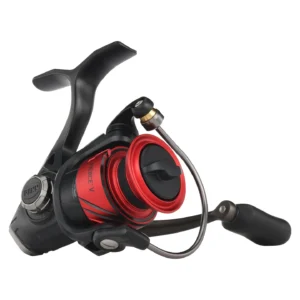
PENN FIERCE® V SPINNING REEL
Price range: $99.95 through $154.95Select options This product has multiple variants. The options may be chosen on the product page -
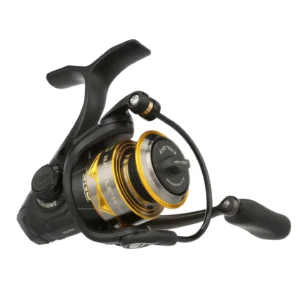
PENN BATTLE® IV SPINNING REEL
Price range: $144.95 through $194.95Select options This product has multiple variants. The options may be chosen on the product page -
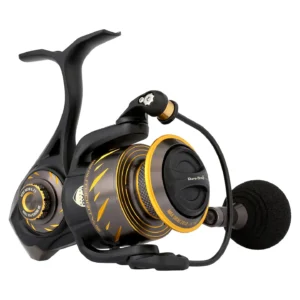
PENN AUTHORITY® SPINNING REEL
Price range: $669.95 through $719.95Select options This product has multiple variants. The options may be chosen on the product page
Reviews
There are no reviews yet.