Don't miss our holiday offer - up to 50% OFF!
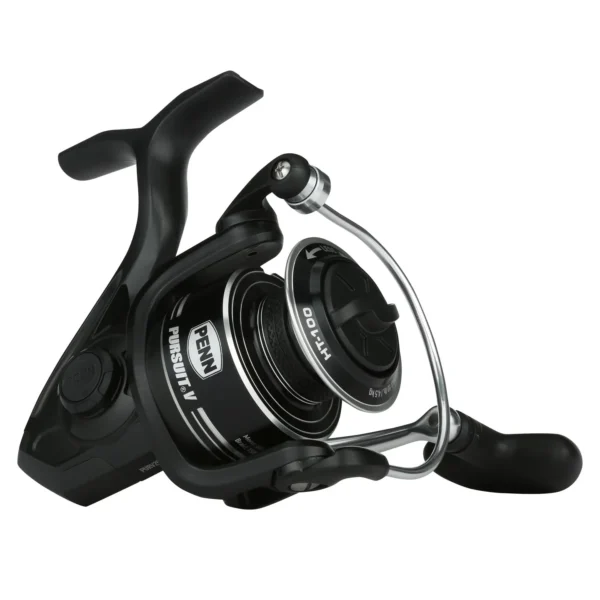
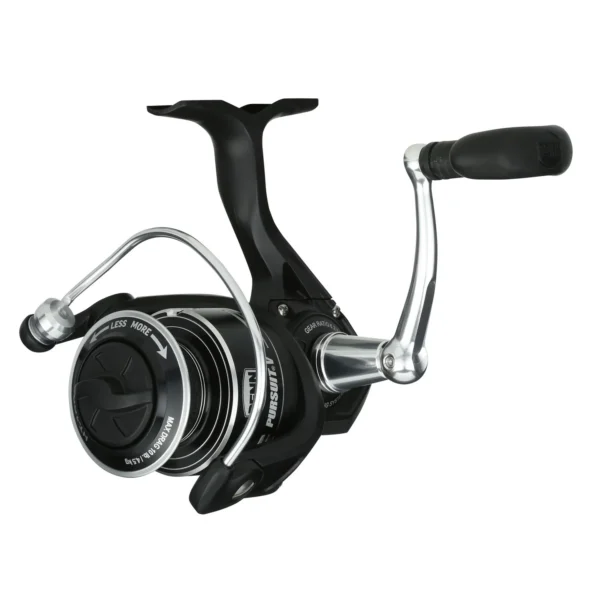
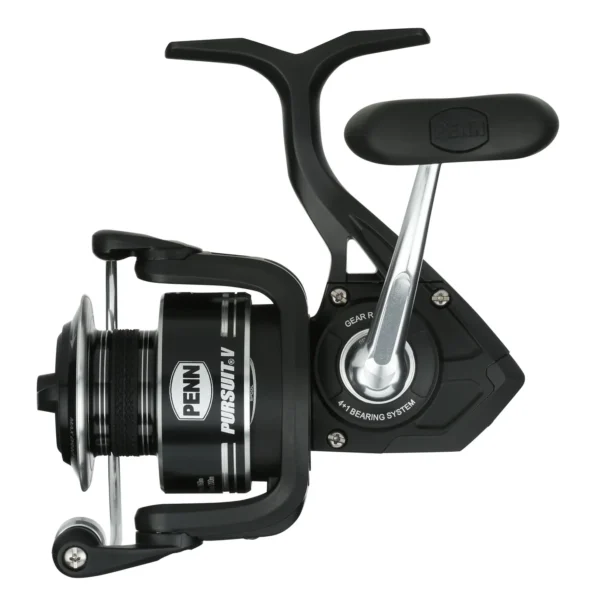
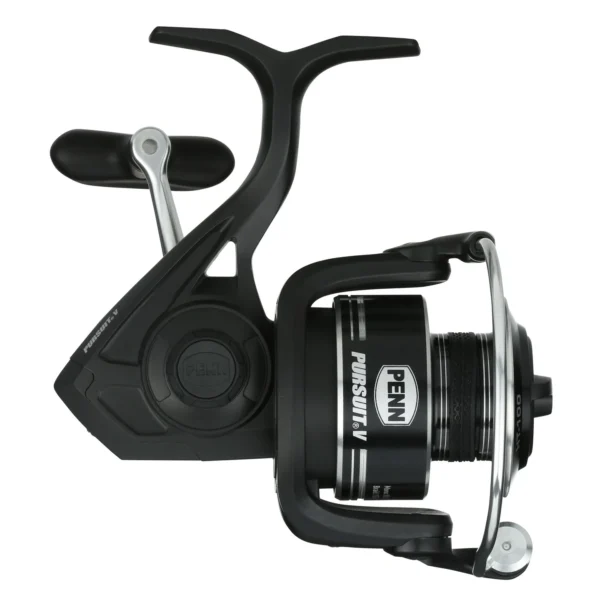
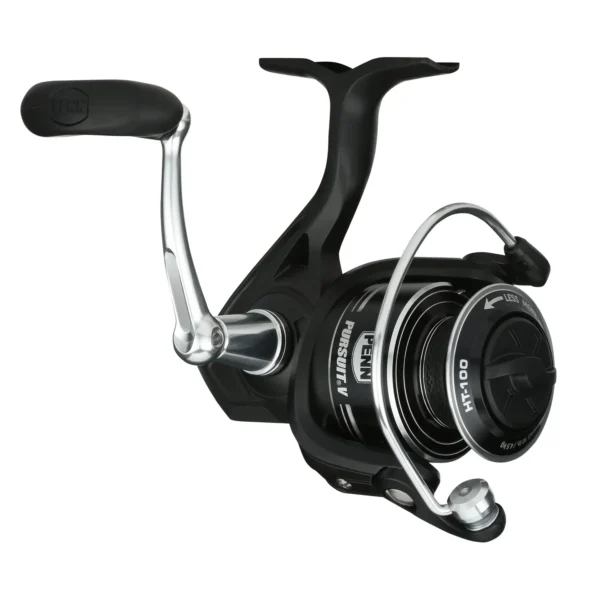
Penn Pursuit® V Spinning Reel
Price range: $79.99 through $114.99
The PENN® Pursuit® V series was built with versatility and reliability at the forefront, with reel sizes for inshore, surf and boat applications, the Pursuit® V has you covered. The reel features the renowned HT-100™ drag system and a 4-sealed stainless steel bearing system, ensuring smooth and reliable performance. The graphite body is corrosion resistant, only adding to this platforms durability in tough conditions. The braid ready spool allows braid to be tied directly to the spool, there is no need for mono backing. The one size fits all line clip allows for easy line management when rigging lines or stowing your reel for the next adventure.
Penn Pursuit® V Spinning Reel
Pursuit® V Spinning Reel
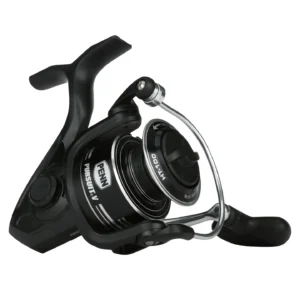
A Dependable Spinning Reel for Versatile Fishing
Reliable equipment can make every fishing experience feel more controlled, comfortable, and enjoyable. For that reason, a versatile spinning reel can be selected when dependable handling and practical performance are desired across different fishing situations.
The Pursuit® V Spinning Reel has been positioned as a practical choice for anglers who value accessible performance, straightforward handling, and adaptable use. Moreover, a balanced spinning-reel design can be paired with a wide range of fishing rods, lines, and lure presentations.
Whether freshwater species are being targeted from shore, a productive pond is being explored, or light inshore opportunities are being pursued, a versatile reel can be used with confidence. In addition, an approachable design can be appreciated by beginners while remaining useful for experienced anglers who prefer uncomplicated equipment.
Rather than requiring an overly complicated setup, a practical spinning reel can be integrated into many everyday fishing combinations. Furthermore, comfortable operation can be supported when the reel is appropriately matched with the rod, line, lure weight, and intended fishing environment.
Built for Everyday Fishing Versatility
A Practical Choice for Different Anglers
Fishing preferences can vary considerably. Some anglers prefer quiet freshwater sessions, while others enjoy shore-based saltwater fishing. Likewise, different experience levels can be accommodated when equipment is designed around accessible operation.
A versatile spinning reel can therefore be selected for a broad range of fishing applications. Beginners can be introduced to fundamental casting techniques without unnecessary complexity. Meanwhile, experienced users can benefit from a familiar spinning-platform format when efficient lure presentation and controlled retrieves are preferred.
Additionally, the equipment can be incorporated into different fishing setups according to personal preferences. A lighter configuration may be selected for smaller presentations, whereas a larger setup can be chosen when additional line capacity and fighting capability are required.
Designed Around Straightforward Handling
Simple operation is often valued when attention is meant to remain on the water rather than on equipment adjustments.
With a spinning reel, casting can be performed without the spool-management requirements associated with many baitcasting designs. As a result, an approachable platform can be provided for anglers who are learning casting fundamentals.
Furthermore, line management can be made easier through familiar spinning-reel components. The bail can be opened before a cast and returned afterward, while line can be retrieved through the rotating rotor system.
Because of this straightforward arrangement, a wide variety of casting techniques can be practiced and refined.
Product Highlights
- Versatile spinning-reel format for a variety of fishing applications
- Accessible operation for different experience levels
- Adaptable setup potential across suitable rods and fishing lines
- Practical casting platform for common lure and bait presentations
- Comfort-focused handling for extended fishing sessions
- Suitable for varied environments when the correct model size and setup are selected
- Straightforward maintenance approach for routine care
- Useful for freshwater and appropriate light-duty saltwater applications
- Flexible pairing potential with different fishing rods
- Designed for anglers seeking dependable everyday functionality
Casting Performance and Control
Smooth Casting Fundamentals
Casting distance is influenced by numerous factors. Line diameter, lure weight, rod action, wind conditions, casting technique, and spool capacity can all affect the final result.
Consequently, no reel should be considered independently from the complete fishing system.
A properly matched spinning reel can support consistent casting by allowing line to leave the spool in a controlled manner. When suitable line is selected and the rod is properly loaded, efficient lure projection can be achieved with less unnecessary effort.
Moreover, casting performance can be improved through practice. A smooth motion is generally preferred over excessive force. Therefore, controlled acceleration can be used to develop more repeatable casts.
Line Management During Casting
Effective line management can contribute significantly to casting consistency.
Before a cast is made, the line can be positioned correctly against the spool and managed through the bail mechanism. Afterward, the line can be retrieved under controlled tension.
When loose loops are reduced, unnecessary tangles can also be minimized. Likewise, proper line selection can help prevent problems caused by using a diameter or material that is poorly matched to the reel.
For that reason, the overall setup should be considered as a complete system rather than as a collection of unrelated components.
Retrieval and Lure Presentation
Controlled Retrieves
Once a lure has entered the water, retrieval becomes an important part of the fishing process.
Different lure styles can require different retrieve speeds. A slow presentation may be preferred for certain soft plastics or bottom-oriented techniques, while faster movement may be desirable for reaction-based presentations.
Accordingly, a reel with an appropriate gear ratio can be selected according to the intended fishing method.
Steady retrieval can be maintained when the handle is turned at a consistent pace. Alternatively, intermittent pauses can be introduced when the presentation requires a more varied movement pattern.
Supporting Different Techniques
A versatile spinning setup can be used for many common techniques.
Soft-plastic presentations can be retrieved slowly along structure. Small hard baits can be worked at moderate speeds. Jigs can be lifted and dropped through the water column. Light bait presentations can also be managed when suitable tackle is selected.
Because multiple techniques can be supported, a versatile reel can be particularly useful for anglers who prefer to carry fewer specialized setups.
Choosing the Appropriate Reel Size
Why Reel Size Matters
Reel size should be matched with the intended fishing application.
Smaller reel sizes are commonly preferred when lighter lines, smaller lures, and lighter rods are being used. Larger sizes can be selected when additional line capacity, heavier tackle, or stronger fish are expected.
However, the largest available reel is not automatically the best choice.
An oversized reel can create unnecessary weight when paired with a light rod. Conversely, an undersized reel may provide insufficient line capacity or may not be ideally suited to the intended fishing environment.
Therefore, balance should be prioritized.
Matching the Reel to the Rod
A well-balanced rod-and-reel combination can feel more natural during casting and retrieval.
When the reel is properly matched with the rod, the overall setup can be held comfortably for longer periods. In addition, repeated casting can be made less tiring when unnecessary weight is avoided.
Rod length, power, action, lure rating, and line rating should therefore be considered alongside reel size.
A balanced combination can be particularly valuable when active lure fishing is being performed throughout an extended session.
Selecting the Right Fishing Line
Monofilament Line
Monofilament remains a popular option for many fishing applications.
Its stretch can provide a degree of shock absorption, while its comparatively simple handling can make it approachable for newer anglers.
Furthermore, monofilament can be used effectively for a broad range of general-purpose fishing situations.
When economical and uncomplicated line management is desired, mono can be considered as part of a practical spinning setup.
Braided Line
Braided line can provide high strength relative to diameter.
Because of its thin profile, additional line capacity can sometimes be gained when compared with thicker lines of similar breaking strength.
Braid can also provide increased sensitivity because of its low stretch.
However, careful spool management is still recommended. Appropriate backing, correct filling, and controlled tension can help reduce line-management issues.
Fluorocarbon
Fluorocarbon can be used as a leader material when reduced visibility or abrasion resistance is desired.
Rather than requiring the entire spool to be filled with fluorocarbon, a leader can be attached to a suitable main line.
This arrangement can provide flexibility because different leader lengths and strengths can be selected according to the fishing situation.
Drag Performance and Fish Control
Why Drag Matters
The drag system serves an important role when a fish makes a powerful run.
Rather than requiring the angler to hold the line completely fixed, controlled resistance can be provided through the reel. This can allow line to be released under heavy pressure while reducing the likelihood of sudden line failure.
A properly adjusted drag can therefore be considered an essential part of a complete fishing setup.
Setting the Drag Correctly
Drag should not simply be tightened as much as possible.
Instead, an appropriate setting should be selected according to line strength, hook size, target species, and fishing environment.
Before fishing begins, the drag can be tested by pulling line steadily from the reel. Adjustments can then be made gradually.
When a fish is hooked, smooth pressure can be maintained while the drag is allowed to perform its intended function.
Freshwater Fishing Applications
Lakes and Ponds
Freshwater environments can provide excellent opportunities for versatile spinning equipment.
Bass, panfish, trout, catfish, and other species can be targeted with appropriately matched tackle. Depending on the target, different lure sizes, line types, and rod actions can be selected.
For smaller presentations, a lighter configuration can be preferred. For stronger fish or heavier cover, a more robust setup can be selected.
Rivers and Streams
Moving water introduces additional considerations.
Current strength, water depth, structure, and target species can influence tackle selection. Accordingly, line strength and lure weight should be chosen with the environment in mind.
A versatile spinning platform can be particularly useful when changing conditions are expected throughout a fishing trip.
Inshore Fishing Considerations
Light Saltwater Applications
When a spinning reel is used around saltwater, additional care should be provided.
Salt residue can accumulate on exposed surfaces and may contribute to corrosion when equipment is not properly maintained. Therefore, rinsing and drying should be incorporated into routine post-trip care.
Light inshore applications can include fishing around beaches, piers, flats, bays, and other suitable environments.
The reel should always be selected according to the expected species, line requirements, lure weight, and environmental demands.
Saltwater Maintenance
After saltwater exposure, the reel should be treated carefully.
A gentle freshwater rinse can be used to remove surface salt and debris. Excessive water pressure should be avoided because forceful spraying can potentially drive contaminants deeper into sensitive areas.
After rinsing, the reel should be allowed to dry completely.
Furthermore, routine inspection can be performed around the bail, handle, line roller, and other accessible components.
Comfortable Handling for Extended Sessions
Ergonomic Operation
Fishing often involves hundreds of repeated movements.
Casting, retrieving, adjusting the drag, and working a lure can all be performed repeatedly throughout a session. Consequently, comfortable equipment can become increasingly valuable as fishing time increases.
A well-balanced setup can reduce unnecessary fatigue.
Additionally, a comfortable handle can help maintain consistent retrieve control during long periods of use.
Reducing Unnecessary Fatigue
Fatigue can affect casting accuracy and lure presentation.
For that reason, equipment weight should be considered alongside power and capacity.
A reel should be chosen not merely for maximum capability, but also for compatibility with the rest of the setup.
When rod, reel, line, and lure are properly matched, a more natural fishing experience can be created.
A Useful Choice for Beginners
Learning the Basics
Spinning tackle is frequently selected as an introduction to fishing because its operating sequence can be learned relatively quickly.
Casting fundamentals can be practiced without the spool-control demands associated with some other reel types.
Additionally, lure retrieval can be learned through simple repetitive techniques.
As experience is developed, more advanced presentations can gradually be introduced.
Growing With Your Fishing Experience
A beginner-friendly setup does not have to become irrelevant after basic skills have been mastered.
Instead, a versatile spinning reel can remain useful as techniques become more advanced.
Different lines, leaders, lures, and rods can be introduced over time. In this way, a familiar reel platform can remain part of an evolving fishing system.
Product Listing Benefits
Why This Type of Reel Can Be Considered
- Versatility: Multiple fishing techniques can be supported.
- Accessibility: Straightforward spinning operation can be learned quickly.
- Adaptability: Different line and rod combinations can be used.
- Practicality: Everyday fishing needs can be accommodated.
- Comfort: Properly balanced equipment can be used for longer sessions.
- Maintenance: Routine cleaning and inspection can be incorporated easily.
- Value: A versatile setup can reduce the need for highly specialized equipment.
- Convenience: Familiar controls can simplify casting and retrieval.
- Flexibility: Freshwater and suitable light-duty inshore applications can be addressed with appropriate configurations.
Building a Complete Fishing Setup
Rod Selection
The rod should be selected according to lure weight, target species, fishing environment, and line strength.
A lighter rod can be paired with a smaller reel when finesse presentations are being used. For stronger applications, a heavier rod and appropriately sized reel can be selected.
The goal should be balance rather than simply maximum strength.
Lure Selection
Lure choice should be determined by target species and local conditions.
Soft plastics, crank-style lures, spoons, jigs, topwater presentations, and other options can be incorporated when their weight falls within the recommended range of the selected rod.
A suitable lure can help the rod load efficiently during casting.
Leader Selection
Leader strength can be adjusted according to the expected conditions.
Clear water may encourage the use of a less visible leader. Around rocks, vegetation, docks, or other abrasive structures, increased leader strength may be preferred.
The connection between main line and leader should also be tied or secured appropriately.
Care and Maintenance
Cleaning After Fishing
Routine maintenance should not be overlooked.
After a fishing session, loose debris can be removed from accessible areas. Saltwater-exposed equipment should receive additional attention.
A gentle rinse can be used where appropriate, followed by thorough drying.
Storage Between Trips
The reel should be stored in a dry location.
Extreme humidity should be avoided whenever possible. Likewise, unnecessary exposure to direct sunlight and excessive heat should be minimized.
When the reel is transported, protection from impact and contamination can be provided through a suitable reel cover or storage system.
Periodic Inspection
Before an important fishing trip, the reel can be inspected.
The handle can be checked for smooth operation. The bail can be examined for proper movement. The line roller can be inspected for debris or unusual wear.
If abnormal resistance, noise, looseness, or damage is noticed, professional servicing can be considered.
Fishing With Confidence
Confidence can be influenced by equipment familiarity.
When the operation of a reel is understood, attention can be focused more effectively on water conditions, lure movement, structure, and fish behavior.
A dependable spinning setup can therefore become more than a simple piece of equipment. It can become a familiar part of an angler’s routine.
Whether a quiet morning is being spent beside a freshwater lake or an active day is being enjoyed from an inshore shoreline, the right combination of equipment can make the experience more rewarding.
Frequently Asked Questions
Is this type of spinning reel suitable for beginners?
Yes. A spinning-reel platform can be particularly approachable for anglers who are developing casting and retrieval skills.
Can it be used for freshwater fishing?
Yes. With the appropriate reel size, rod, line, and lure combination, freshwater applications can be supported.
Can it be used around saltwater?
Suitable light-duty saltwater applications can be considered when the reel is appropriately selected and properly maintained. Thorough post-trip cleaning is especially important after saltwater exposure.
What line should be used?
Monofilament, braided line, and suitable leader combinations can all be considered. The final choice should be based on target species, fishing environment, lure presentation, and personal preference.
How should the drag be adjusted?
The drag should be set according to line strength, hook size, target species, and expected fighting conditions. Excessively tight settings should generally be avoided.
Can different fishing rods be paired with the reel?
Yes, provided that the reel size and specifications are appropriately matched to the rod’s power, lure range, and intended application.
Final Product Overview
Versatility has been placed at the center of a practical spinning setup.
For anglers seeking accessible operation, adaptable use, and dependable everyday functionality, a suitable spinning reel can provide an effective foundation for numerous fishing experiences.
Freshwater sessions can be supported. Light inshore opportunities can be accommodated when appropriate care is provided. Different line systems can be incorporated. Multiple lure presentations can be explored.
Most importantly, the complete setup can be tailored to the angler.
With the right rod, line, lure, and reel size selected, a balanced system can be created for enjoyable and productive fishing.
Key Product Takeaways
- Versatile spinning design
- Accessible operation
- Broad setup compatibility
- Practical casting performance
- Controlled retrieval
- Adjustable drag functionality
- Freshwater versatility
- Suitable light-duty inshore applications with proper maintenance
- Multiple line options
- Beginner-friendly operation
- Useful for experienced anglers
- Comfortable everyday fishing potential
- Straightforward care requirements
- Flexible rod and lure pairing
The result is a practical fishing platform in which simplicity, versatility, and usability can be brought together without excessive complexity.
Penn Pursuit® V Spinning Reel
Versatile Fishing Performance for Everyday Angling
A dependable fishing setup can be built around equipment that is practical, adaptable, and easy to understand. For anglers seeking a versatile spinning platform, the Penn Pursuit® V Spinning Reel can be considered for a wide range of fishing situations where smooth operation, practical handling, and dependable usability are valued.
Across freshwater environments, inshore locations, shorelines, piers, and other suitable fishing areas, a well-matched spinning reel can be used as an important part of a complete tackle system. Moreover, different fishing techniques can be supported when the reel is paired with an appropriate rod, line, lure, and target-specific setup.
Rather than being limited to a single fishing style, a versatile spinning platform can be incorporated into numerous configurations. Consequently, anglers can be provided with flexibility when different species, waters, and techniques are encountered.
The right equipment should also be approachable. Therefore, a spinning design can be particularly useful for beginners who are learning casting fundamentals while remaining practical for experienced anglers who prefer familiar operation.
Product Highlights
- Versatile spinning-reel platform for a broad range of fishing applications
- Practical everyday design for anglers with different experience levels
- Flexible rod pairing across suitable spinning-rod configurations
- Multiple line options can be accommodated according to the intended application
- Freshwater versatility for suitable lakes, rivers, ponds, and streams
- Light inshore potential when appropriate care and tackle selection are provided
- Straightforward casting operation for developing and experienced anglers
- Practical lure presentation for numerous common fishing techniques
- Balanced setup potential when correctly matched with the selected rod
- Accessible fishing solution for recreational and regular angling
- Routine maintenance can be performed to support long-term usability
- Useful foundation for customized fishing equipment setups
A Practical Addition to Modern Fishing Equipment
Designed Around Versatility
Fishing conditions are rarely identical from one trip to another. Water depth can change, weather can shift, target species can vary, and different lure presentations may become necessary.
For that reason, versatile fishing reels can be valuable additions to an angler’s equipment collection.
A spinning reel can be selected when straightforward casting and retrieval are desired. Additionally, different line configurations can be used according to the fishing environment and preferred technique.
Freshwater fishing can be approached with lighter tackle. Meanwhile, suitable inshore opportunities can be addressed with appropriately selected equipment and careful maintenance.
Because different configurations can be created around the same basic reel platform, a versatile spinning setup can be used as an adaptable part of a larger tackle collection.
Suitable for Different Experience Levels
Fishing equipment does not need to be complicated to be useful.
Beginners can be introduced to spinning tackle through relatively simple casting and retrieval techniques. At the same time, more experienced anglers can continue to use the same style of equipment for lure fishing, bait presentations, and other applications.
Furthermore, a familiar setup can reduce unnecessary learning curves.
Once casting, bail operation, drag adjustment, and retrieval control have been understood, additional techniques can be introduced gradually.
As a result, a practical spinning reel can remain useful throughout different stages of an angler’s experience.
Spinning-Reel Operation
Straightforward Casting
A spinning reel is commonly selected when accessible casting operation is desired.
Before a cast, the bail can be opened and the line can be controlled against the rod with the casting hand. During the forward motion, the line can be released, allowing the lure to travel toward the intended area.
Afterward, the bail can be returned and retrieval can be started.
This straightforward process can be especially useful for anglers who are developing casting consistency.
Moreover, spinning tackle can be used for a broad range of lure weights when the rod, line, and reel size are appropriately matched.
Casting Accuracy
Accuracy is influenced by more than the reel alone.
Rod length, lure weight, line diameter, wind direction, casting technique, and water conditions can all affect the final result.
Therefore, a complete setup should be considered when improved casting consistency is desired.
A balanced combination can make repeated casting more comfortable. In addition, practice can be used to improve distance, accuracy, and lure placement.
Smooth acceleration is generally preferred over excessive force. Consequently, controlled casting can be developed through repetition.
Line Management
Line management can be considered one of the most important aspects of spinning-reel operation.
When line is wound under appropriate tension, more consistent spool organization can be achieved. Conversely, excessive slack can contribute to loops, tangles, and other common problems.
For that reason, attention should be given to how line is loaded and retrieved.
After casting, line can be kept under controlled tension during retrieval. When a lure is being worked through current, vegetation, rocks, or other structure, appropriate tension can also contribute to better lure control.
Fishing Line Selection
Monofilament Line
Monofilament remains widely used because of its straightforward handling and versatility.
A degree of stretch is provided by monofilament, which can be useful when shock absorption is desired. Additionally, uncomplicated knot tying can make mono appealing for anglers who prefer simple tackle preparation.
For general freshwater applications, recreational fishing, and many common lure presentations, monofilament can be considered.
However, line diameter should always be matched to the reel and intended fishing application.
Advantages of Monofilament
- Easy handling can be provided.
- Knots can be tied relatively simply.
- Stretch can provide shock absorption.
- General-purpose applications can be supported.
- Cost-conscious setups can be created.
- Beginners can be introduced to line management more easily.
Braided Fishing Line
Braided line can be selected when high strength relative to diameter is desired.
Because a thinner profile can be provided for comparable breaking strength, additional line capacity may be available on appropriately sized reels.
Furthermore, reduced stretch can provide increased sensitivity.
For lure fishing, structure fishing, and situations where subtle contact needs to be detected, braided line can be useful.
However, appropriate spool preparation should be used. Backing may be added where necessary, and line should be wound under controlled tension.
Braid and Leader Combinations
A braided main line can be paired with a leader.
Fluorocarbon or monofilament leaders can be selected according to the fishing conditions.
A leader may be used where abrasion resistance, reduced visibility, or presentation characteristics are desired.
Therefore, the main line and leader can be customized separately instead of requiring one line material for every situation.
Fluorocarbon Leader Applications
Fluorocarbon can be used when a leader with specific underwater characteristics is preferred.
In clearer water, reduced visibility can sometimes be desirable. Around rocks, docks, vegetation, and other abrasive structures, leader strength can also become an important consideration.
The leader length and strength should be selected according to the species being targeted and the environment being fished.
Consequently, a flexible line system can be created around the spinning reel.
Freshwater Fishing Applications
Lake Fishing
Lakes can provide a wide range of fishing opportunities.
Bass, crappie, trout, catfish, perch, and other species may be targeted depending on the region and local regulations.
Different presentations can be used according to depth, water clarity, structure, temperature, and seasonal behavior.
A versatile spinning setup can therefore be useful when several lure styles are being carried during the same trip.
Shore-Based Lake Fishing
Shore anglers often need equipment that can accommodate changing casting distances.
A spinning setup can be especially useful when lures must be presented around vegetation, drop-offs, points, submerged structure, or open water.
Rod length and action should be selected according to the casting requirements.
River and Stream Fishing
Moving water creates different demands.
Current can influence lure movement and line control. Therefore, appropriate lure weight and line strength should be selected.
A spinning reel can be used for various river techniques, including controlled lure presentations, light bait fishing, and other suitable approaches.
Smaller streams may favor lighter tackle, while larger rivers can require more robust combinations.
Fishing Around Structure
Structure can include rocks, submerged branches, vegetation, docks, and other underwater features.
These areas can provide opportunities because fish may be attracted to cover.
However, increased abrasion risk can also be created.
For that reason, leader strength and drag settings should be considered carefully when fishing around structure.
Inshore Fishing Potential
Saltwater Fishing Considerations
Saltwater fishing requires additional attention to equipment care.
Salt residue can accumulate on exposed components and may contribute to corrosion if equipment is neglected.
Therefore, reels used around saltwater should be cleaned appropriately after fishing.
A gentle freshwater rinse can be used to remove surface salt and debris. Excessive water pressure should be avoided because contaminants may be forced into sensitive areas.
Afterward, the reel should be allowed to dry completely.
Inshore Environments
Inshore fishing can take place around beaches, bays, flats, piers, jetties, and other coastal environments.
Depending on the reel size and complete tackle configuration, different species and presentations may be targeted.
Light inshore applications can be supported when the equipment has been appropriately matched to the expected conditions.
The phrase saltwater fishing reels encompasses many specialized configurations, so the intended species, line capacity, drag requirements, and environmental exposure should always be considered before a setup is selected.
Saltwater Reel Care
Post-Trip Cleaning
Saltwater exposure should never be ignored.
Following a coastal fishing trip, visible salt and debris should be removed from accessible surfaces.
A controlled freshwater rinse can be performed when appropriate. The reel should then be dried before being stored.
Additionally, the line roller, bail area, handle, and exterior surfaces can be inspected.
Why Maintenance Matters
Routine care can help preserve the condition of fishing equipment.
Although different reel designs may have different service requirements, a consistent maintenance routine can reduce the accumulation of salt, sand, and debris.
For anglers who regularly use penn saltwater reels, a disciplined cleaning routine can become especially valuable.
Equipment should also be stored in a dry environment between trips.
Rod and Reel Pairing
Choosing a Suitable Fishing Rod
The reel should not be selected independently from the rod.
Rod power, action, length, line rating, and lure rating should all be considered.
A light reel can be paired with a light or medium-light spinning rod when smaller lures and lighter lines are being used.
For stronger applications, a more robust rod and appropriately sized reel can be selected.
Creating a Balanced Setup
Balance is important because excessive weight can affect comfort.
If a reel is too large for a lightweight rod, the combination may feel cumbersome. Conversely, an undersized reel may provide insufficient line capacity for the intended application.
Therefore, the best penn fishing rod and reel combo for a particular angler should be determined by the fishing method rather than by reel size alone.
Lure Presentation
Soft Plastics
Soft-plastic lures can be used with spinning equipment for numerous techniques.
Different shapes, weights, colors, and rigging methods can be selected according to the target species and environment.
A controlled retrieve can be used along structure or through open water.
Pauses can also be introduced when a slower presentation is desired.
Jig Presentations
Jigs can be cast and retrieved through different depths.
Bottom contact can be maintained where appropriate, while a lift-and-drop presentation can be used to create movement.
The rod and line should be selected according to the jig weight and target species.
Hard Baits
Small and medium hard baits can be incorporated into suitable spinning setups.
Crank-style presentations can be retrieved at controlled speeds. Minnow-style lures can be worked through open water. Spoons can be cast across areas where longer-distance coverage is desired.
Because lure behavior is affected by retrieve speed, line diameter, rod action, and water conditions, adjustments may be required throughout the fishing session.
Drag Management
Why Drag Matters
The drag system provides controlled resistance when a fish pulls against the line.
Rather than requiring the line to remain completely locked, controlled line release can be permitted.
This can be especially important when lighter line is being used or when powerful fish make sudden runs.
Setting the Drag
The drag should be adjusted according to the line, hook, target species, and fishing environment.
An excessively tight setting can increase stress on the line and terminal tackle.
A setting that is too loose can reduce hook-setting control.
Therefore, a balanced adjustment should be used.
Before fishing begins, the drag can be tested manually and adjusted gradually.
Comfort During Long Fishing Sessions
Ergonomic Handling
Fishing can involve hundreds of repeated movements.
Casting, retrieving, adjusting the drag, changing lures, and fighting fish can all be performed throughout a single session.
Consequently, comfortable tackle can make a meaningful difference.
A properly balanced rod-and-reel combination can reduce unnecessary fatigue.
Furthermore, a comfortable handle can support consistent retrieval when lures are being worked for extended periods.
Repetitive Casting
Repeated casting can place demands on the wrist, forearm, and shoulder.
For that reason, unnecessary equipment weight should be avoided where possible.
The reel size should be appropriate for the rod and intended fishing application.
A balanced setup can allow casting motions to remain smooth rather than forced.
Affordable Fishing Equipment
Value Without Unnecessary Complexity
Fishing equipment is available across a broad range of prices.
Premium reels can be designed for specialized applications, while affordable fishing reels can provide practical solutions for recreational users.
The most expensive fishing reel is not automatically the best choice for every angler.
Instead, value should be considered in relation to intended use.
An angler who fishes occasionally may prioritize simplicity and affordability. Someone who fishes frequently may prioritize durability, capacity, drag performance, and specialized features.
Building a Cost-Conscious Setup
A practical setup does not require every component to be premium-priced.
An appropriate rod can be paired with a suitable reel and properly selected line.
Lures can then be chosen according to the species and environment.
This approach can create a useful fishing system while unnecessary specialization is avoided.
Understanding Different Fishing Reels
Spinning Reels
Spinning reels are often chosen for versatility.
They can support numerous lure styles and can be used by anglers across a broad range of experience levels.
Casting operation can be learned relatively quickly, making spinning equipment especially accessible.
Conventional Reels
Conventional reels can be preferred for applications requiring different spool orientations and techniques.
They are commonly associated with heavier tackle, trolling, offshore fishing, and specialized saltwater applications.
Terms such as penn conventional reels, deep sea fishing reels, and offshore fishing reels generally refer to equipment designed around more demanding fishing environments.
Baitcasting Reels
Baitcasting equipment can provide strong casting control for experienced users.
However, additional casting skill may be required.
Backlash management, spool tension, braking systems, and thumb control can become important considerations.
For anglers who prefer straightforward operation, spinning tackle can remain an attractive alternative.
Choosing the Right Reel Type
The appropriate reel depends on:
- Target species
- Fishing environment
- Lure weight
- Line type
- Casting distance
- Experience level
- Rod configuration
- Required line capacity
- Expected fish size
Therefore, different fishing reels should be evaluated according to application rather than appearance alone.
Building a Saltwater Fishing Setup
Inshore Configurations
Inshore fishing can involve a combination of light and moderate tackle.
Depending on the species, a spinning setup can be used with braided line and an appropriate leader.
The rod should be selected for the expected lure weight and fish size.
Additionally, saltwater maintenance should be incorporated after every trip.
Offshore and Deep-Sea Applications
More demanding environments can require specialized equipment.
Heavy-duty fishing reels, deep-sea reels, conventional tackle, and specialized rods may be selected when larger fish and greater depths are involved.
Therefore, a general-purpose spinning reel should not automatically be substituted for dedicated deep-sea equipment.
Instead, tackle should be selected according to the actual demands of the environment.
PENN Fishing Equipment Ecosystem
A Broad Tackle Category
The PENN name is associated with a wide variety of fishing equipment categories.
Within that broader ecosystem, spinning reels, conventional reels, rods, combos, and saltwater-oriented tackle can be found.
Terms such as penn fishing reels, penn rods, penn surf rods, penn spinning reels, and penn saltwater fishing reels can describe different equipment categories rather than identical products.
Consequently, each model should be evaluated according to its intended application.
Comparing Related PENN Reel Families
Anglers may encounter names such as:
- PENN Battle IV
- PENN Pursuit
- PENN Slammer
- PENN Spinfisher
- PENN Warfare
- PENN International
- PENN Senator
- PENN conventional reel families
These product families are associated with different styles of fishing equipment.
For example, spinning-reel models can be suited to casting applications, while conventional designs may be better suited to specialized offshore or heavy-duty techniques.
Rod and Reel Combos
Convenience for New Anglers
A rod-and-reel combo can simplify equipment selection.
Instead of choosing every component individually, a matched combination can be provided.
This can be particularly convenient for beginners or anglers who want a ready-to-use fishing setup.
Benefits of a Combo
- Matching components can be provided.
- Setup time can be reduced.
- Compatibility concerns can be simplified.
- Beginners can receive a more approachable starting point.
- Transportation can be easier.
- A complete configuration can be purchased in one package.
However, individual components can still be preferable when highly specific fishing techniques are being pursued.
Fishing From Shore
Shore Fishing Applications
Shore anglers often need flexibility.
A fishing location may contain open water, vegetation, rocks, current, or submerged structure.
Therefore, a versatile spinning setup can be useful.
Casting distance can also become important when fish are holding farther from shore.
Appropriate rod length, lure weight, and line selection can contribute to better coverage.
Pier and Jetty Fishing
Piers and jetties can provide access to deeper water without a boat.
However, abrasive structure may be present.
Leader strength should therefore be considered, and drag settings should be adjusted according to the expected species.
Saltwater cleaning should also be performed after fishing.
Maintenance for Long-Term Use
Basic Inspection
Before each fishing trip, a few simple checks can be performed.
The bail can be moved through its range. The handle can be rotated. The drag can be tested. The line can be inspected for abrasion.
If unusual noise, resistance, or looseness is detected, further inspection should be considered.
Line Replacement
Fishing line should not be kept indefinitely.
Exposure to sunlight, abrasion, water, and repeated use can affect line condition.
Damaged or heavily worn line should be replaced.
Fresh line can improve confidence and reduce the risk of preventable line failures.
Inclusive Fishing for Every Angler
Equipment Should Support the Experience
Fishing is enjoyed by people with different experience levels, physical abilities, preferences, and techniques.
Equipment selection should therefore be based on individual needs rather than assumptions.
A lighter setup may be preferred by one angler, while another may choose heavier tackle.
Similarly, some anglers may prefer bait presentations, while others may focus on artificial lures.
There is no single correct way to enjoy recreational fishing.
Adapting the Setup
Rod length can be adjusted. Reel size can be changed. Line strength can be modified. Lure selection can be personalized.
Through these adjustments, a fishing setup can be made more comfortable and practical for the individual user.
That flexibility is one of the strongest advantages of a versatile spinning platform.
Why a Versatile Spinning Reel Can Be a Smart Choice
Everyday Practicality
A reel does not need to be specialized for every fishing trip.
A versatile spinning setup can be used across multiple environments when the selected configuration remains within its intended application.
Freshwater fishing can be supported. Suitable inshore fishing can be explored. Different lure styles can be tested.
Consequently, one practical reel can become a useful part of an angler’s everyday equipment collection.
Easy Integration
The reel can be incorporated into a larger collection of:
- Spinning rods
- Fishing lines
- Leaders
- Soft plastics
- Hard baits
- Jigs
- Hooks
- Swivels
- Terminal tackle
- Fishing accessories
This creates a flexible platform around which different fishing strategies can be developed.
Product Selection Checklist
Before Purchasing
Several factors should be considered before a spinning reel is selected.
Fishing Environment
Will the reel primarily be used in freshwater, inshore saltwater, or a combination of environments?
Target Species
Will smaller freshwater species be targeted, or will stronger fish be encountered?
Rod Compatibility
Does the reel size complement the selected rod?
Line Capacity
Will enough line be available for the intended application?
Lure Weight
Can the selected rod and line efficiently support the planned lure presentations?
Maintenance
Will the reel receive the appropriate cleaning and storage after use?
These questions can help prevent equipment from being selected solely on appearance or price.
SEO Product Listing Highlights
Key Benefits
- Versatile spinning tackle for everyday anglers
- Practical choice for freshwater fishing
- Suitable for selected light inshore applications
- Compatible with multiple fishing-line systems
- Useful with a variety of lure presentations
- Approachable for beginners
- Adaptable for experienced anglers
- Suitable for customized rod-and-reel setups
- Convenient for recreational fishing
- Designed around straightforward spinning operation
- Easy to incorporate into a broader tackle collection
- Appropriate maintenance can support continued usability
Frequently Asked Questions
Is the PENN Pursuit® V suitable for beginners?
A spinning platform can be particularly suitable for beginners because the casting and retrieval process can be learned relatively easily.
Can it be used with braided line?
A suitable braided-line setup can be considered when the reel, rod, and intended fishing application are appropriately matched.
Can monofilament be used?
Yes. Monofilament can be considered for many general-purpose fishing applications.
Can a leader be used?
Yes. A suitable leader can be added when abrasion resistance, presentation, or other characteristics are desired.
Is it suitable for saltwater?
Appropriate light saltwater applications can be considered when the equipment is used within its intended limits and carefully maintained after exposure.
What rod should be paired with it?
The rod should be selected according to reel size, lure weight, line rating, target species, and fishing environment.
Can it be used for shore fishing?
Yes, where the reel size and complete tackle configuration are appropriate for the intended shore-fishing application.
Is a spinning reel different from a conventional reel?
Yes. The two reel types use different designs and are generally selected for different fishing applications.
Final Overview
A practical fishing reel can become an important part of a complete angling system.
Versatility, accessibility, and appropriate equipment matching can be prioritized when a spinning setup is being selected. Furthermore, the overall fishing experience can be improved when the reel is paired with a suitable rod, line, lure, and target-specific configuration.
From freshwater lakes and rivers to suitable inshore environments, different opportunities can be explored with the right preparation.
Routine maintenance should be included, especially after saltwater exposure. Likewise, line condition, drag adjustment, rod compatibility, and lure selection should be reviewed regularly.
Ultimately, successful equipment selection is not determined by a single feature or marketing phrase.
Instead, the best setup is created when the equipment is matched to the angler, the environment, and the intended style of fishing.
Final Product Highlights
- Versatile spinning-reel design
- Practical everyday fishing application
- Broad rod compatibility
- Multiple line options
- Freshwater versatility
- Suitable light inshore use with proper care
- Beginner-friendly operation
- Useful for experienced anglers
- Flexible lure presentation
- Balanced setup potential
- Practical maintenance requirements
- Adaptable fishing-system integration
The result is a flexible fishing platform through which different techniques, environments, and experience levels can be accommodated.
| MODEL/LENGHT | 2500/6.2:1, 3000/6.2:1, 4000/6.2:1, 5000/5.6:1, 6000/5.6:1, 8000/5.3:1 |
|---|
Related products
-
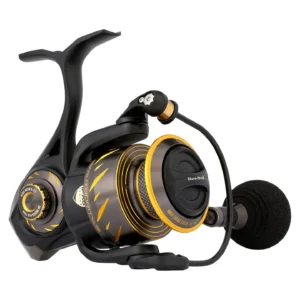
PENN AUTHORITY® SPINNING REEL
Price range: $669.95 through $719.95Select options This product has multiple variants. The options may be chosen on the product page -
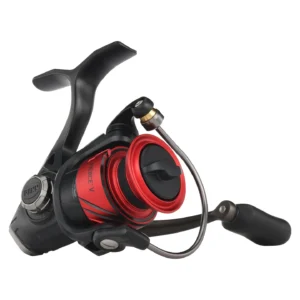
PENN FIERCE® V SPINNING REEL
Price range: $99.95 through $154.95Select options This product has multiple variants. The options may be chosen on the product page -
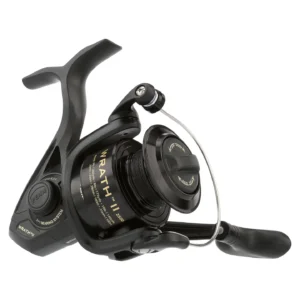
PENN Wrath® II Spinning Reel
Price range: $59.99 through $79.99Select options This product has multiple variants. The options may be chosen on the product page -
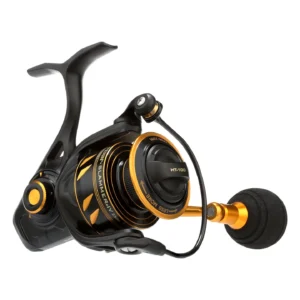
PENN SLAMMER® IV SPINNING REEL
Price range: $299.95 through $469.95Select options This product has multiple variants. The options may be chosen on the product page